

Ever stared at your phone screen after receiving a one-word “Sup” and had absolutely no idea what to say back? You are not alone. That tiny, three-letter word carries more weight than it looks. Whether it is coming from a close friend, a coworker, or someone you have a crush on, knowing how to reply and what “sup” actually means can change the tone of the entire conversation.
In this guide, you will learn exactly what “sup” means in chat, on WhatsApp, and in everyday English. You will also get practical, creative, and even flirty replies organized by situation, so you never feel stuck again.
Sup Meaning in English
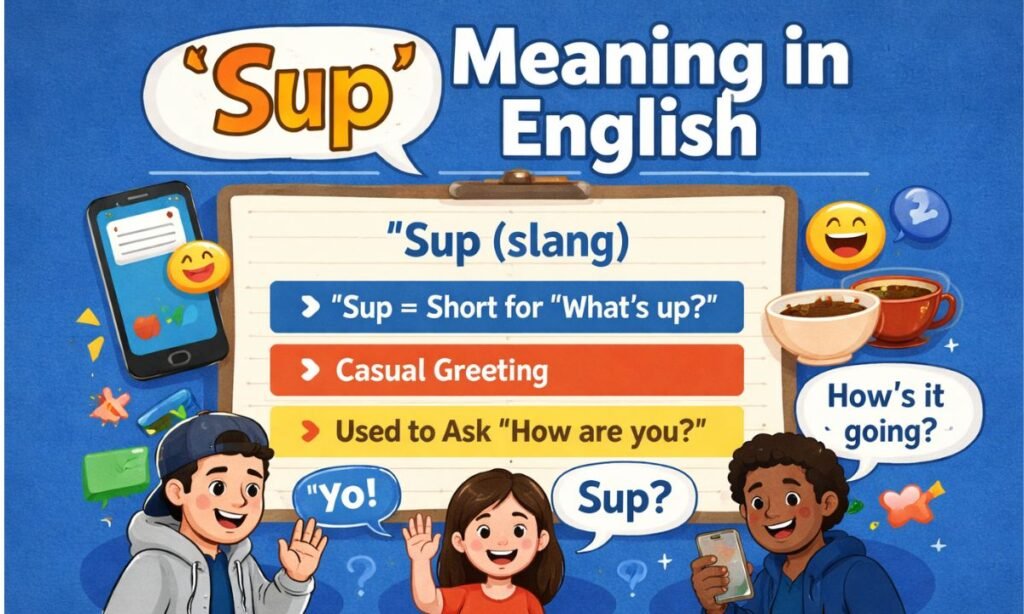
At its most basic level, “sup” is a shortened form of “what’s up?” which itself is an informal way of asking “how are you?” or “what’s going on?” It functions more as a greeting than a genuine question, similar to how people say “how do you do?” without expecting a medical report in return.
The word sits comfortably in the world of everyday casual slang. When someone says “sup,” they are not necessarily expecting a long, thoughtful answer. They are opening a conversational door and waiting to see if you walk through it.
In standard English usage, “sup” also has older meanings it can refer to eating supper or taking a small sip of liquid. But in the context of modern texting and digital communication, it is almost always the greeting form.
Sup Meaning in Chat and WhatsApp
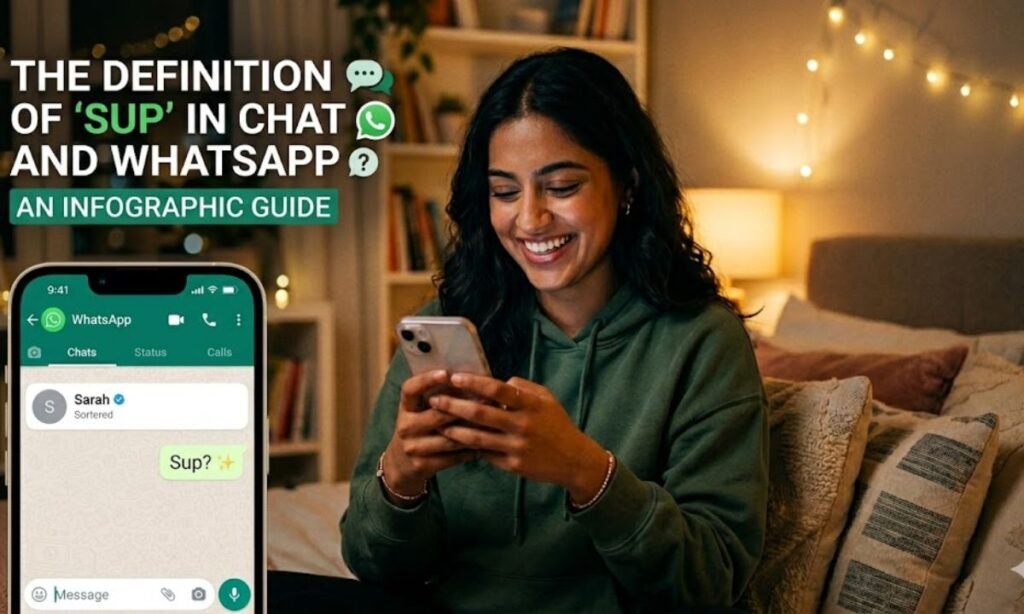
When you receive “sup” on WhatsApp, it is typically a relaxed, low-stakes check-in. Your contact might be bored, might want to see if you are free to talk, or might simply be using it the way someone waves across a room no deep agenda attached.
On Instagram DMs, “sup” can carry a flirty undertone, especially if it follows something like a story view or a comment on your photo. On Snapchat, it often pops up in quick story replies. The platform changes the vibe, but the core meaning stays consistent: a casual, informal opener.
“Sup” in WhatsApp is particularly common because the app is built around quick messaging. People tend to use shorter expressions to initiate conversations, and “sup” fits perfectly into that culture.
Sup Meaning in Chat from a Girl

When a girl sends “sup,” it usually signals one of three things: she is being friendly and casual, she is comfortable enough with you to skip formal greetings, or she is subtly curious about what you are up to. It is not typically a loaded message but context and your existing relationship matter. If she texts it late at night with an emoji, that is a different story than a quick daytime “sup” in a group chat.
Sup and Its Meaning According to Wikipedia and Dictionaries
According to linguistic references and usage trackers, “sup” as a greeting grew out of American youth culture during the 1980s and 1990s, popularized through movies, hip-hop culture, and eventually television. The viral Budweiser “Wassup!” commercial from the late 1990s helped cement variations of the phrase into pop culture permanently.
The Cambridge Dictionary defines “sup” both as a verb meaning “to drink or eat” and as a casual greeting used to ask someone how they are. Urban Dictionary describes it more colorfully a term used by cool people who are too efficient to type “what’s up.”
So depending on where you look, “sup” is either ancient (it traces back to Middle English “suppen,” meaning to take broth) or thoroughly modern. In today’s context, it is firmly in the camp of digital-era casual greetings.
Why Do People Even Text “Sup”?
Understanding the motivation behind “sup” helps you respond better. People use it for several reasons:
- They want to connect but don’t know how to start. “Sup” is a safe, universal opener that doesn’t require effort or vulnerability.
- They’re checking if you’re available. It tests the waters before committing to a full conversation.
- It’s a habit. Many people default to “sup” the same way others default to “hey” it’s just their go-to opener.
- They’re being intentionally casual. Sending something long and thoughtful can feel too intense. “Sup” keeps things light.
- It can be flirtatious. A simple “sup” from someone who likes you is often a low-risk way to get your attention without being too obvious about it.
Research into digital communication patterns suggests that minimalist greetings like “sup” often function as emotional signals rather than information requests they invite connection while avoiding vulnerability. In other words, “sup” is more about the gesture than the word itself.
Common Situations Where People Use “Sup”
| Situation | What “Sup” Usually Means |
| Friend texting out of nowhere | “I’m bored, want to chat?” |
| Crush texting late at night | Subtle interest or flirtation |
| Coworker in a casual office | Friendly check-in |
| Someone you haven’t spoken to in months | “Let’s reconnect” |
| Acquaintance in passing | Social courtesy, no real expectation |
| Person you just met | Testing comfort level |
Reading the situation correctly is half the battle. A “sup” from your best friend after three days of silence means something very different from a “sup” you receive from a classmate right before an assignment is due.
How to Respond to “Sup” Without Sounding Boring
The most common (and most forgettable) reply to “sup” is “nm, u?” short for “nothing much, you?” There is nothing wrong with it, but it is also the conversational equivalent of beige wallpaper. It keeps things going without adding anything interesting.
Here is how to level up your replies without overthinking it.
The Core Principle: Add One Detail
Instead of just “nothing much,” give them something to respond to. Share one small thing that’s happening in your day something real, specific, or mildly interesting.
“Just burned my third attempt at making pasta. How are you?”
“Watching a documentary about cults. Send help.”
“Somehow managed to be productive for 20 minutes. Personal record.”
These replies do two things: they answer the question and they hand the conversation back with something to grab onto.
Best Replies to “Sup” by Situation
How to Reply to “Sup” from Friends or Peers
When it is someone you know well, you can afford to be more spontaneous and funny. Matching their casual energy while adding a splash of personality is the winning move.
Casual and Easy:
- “Not much, just vibing. You?”
- “Same old, same old but I have tea to spill.”
- “Doing alright! What’s the plan today?”
- “Nothing much, just waiting for life to get interesting.”
- “Living my best mediocre life. You?”
Funny and Playful:
- “Currently arguing with my to-do list. The list is winning.”
- “Counting the hours until Friday. It’s not going well.”
- “Trying to decide if I need a nap or a snack. This is my crisis.”
- “The ceiling, last time I checked.”
- “My anxiety, apparently. But otherwise, fine.”
When You Have Something to Share:
- “So much I’ve been meaning to tell you something. Call me?”
- “Actually a lot! Where do I start?”
- “Not much, but I just finished [show/book] and I need to talk about it.”
Flirty and Fun Replies for “Sup” from a Crush
If the message is coming from someone you like, a well-timed flirty reply can open a lot of doors. The trick is being playful without trying too hard. Light, curious, and a little cheeky tends to work better than anything overly rehearsed.
Flirty Replies That Work:
- “My level of interest just went up. What’s good with you?”
- “Not much, just thinking. You didn’t help by texting.”
- “Honestly? Better now. What about you?”
- “Nothing much unless you have a better idea?”
- “Well, you texted, so clearly something is up. Spill.”
- “Currently pretending to be busy. You caught me. Sup yourself?”
- “I was just thinking about you. That’s wild timing.”
Keep it light. The goal is to be interesting and leave them wanting to keep the conversation going not to drop a confession or a compliment that lands too heavily.
Unexpected and Creative Replies That Stand Out
If you want to be memorable, ditch the template. These replies work because they are unexpected and unexpected is the one thing that stands out in a feed full of “nm u?” responses.
- “Currently arguing with my cat about fridge rights. Losing.”
- “Hoping this ‘sup’ leads somewhere better than small talk.”
- “Trying to finish a to-do list that’s actively judging me.”
- “One espresso away from becoming a main character.”
- “Plot twist: I’m doing great. How’s your chaos going?”
- “What is up? Philosophically or practically?”
- “About to make a life decision. Good timing. What’s your vote?”
These work particularly well in conversations where you want to inject some energy or humor. They invite a response almost automatically because they leave the other person curious.
Sup Reply in Chat: A Quick Reference Table
| Mood | Best Reply to Use |
| Casual and easy-going | “Not much, just chilling. You?” |
| Funny | “Trying to figure out if I’m tired or bored. The verdict is both.” |
| Flirty | “Better now that you texted. What’s good?” |
| Busy | “Kind of swamped, but I’ve got a minute. What’s up?” |
| Don’t feel like talking | “All good, just a bit tied up right now.” |
| Want to spark conversation | “Actually a lot where do I start?” |
| Creative and unexpected | “One decision away from being a cautionary tale. Sup with you?” |
What Is “Sup Tuesday” and What Does It Mean?
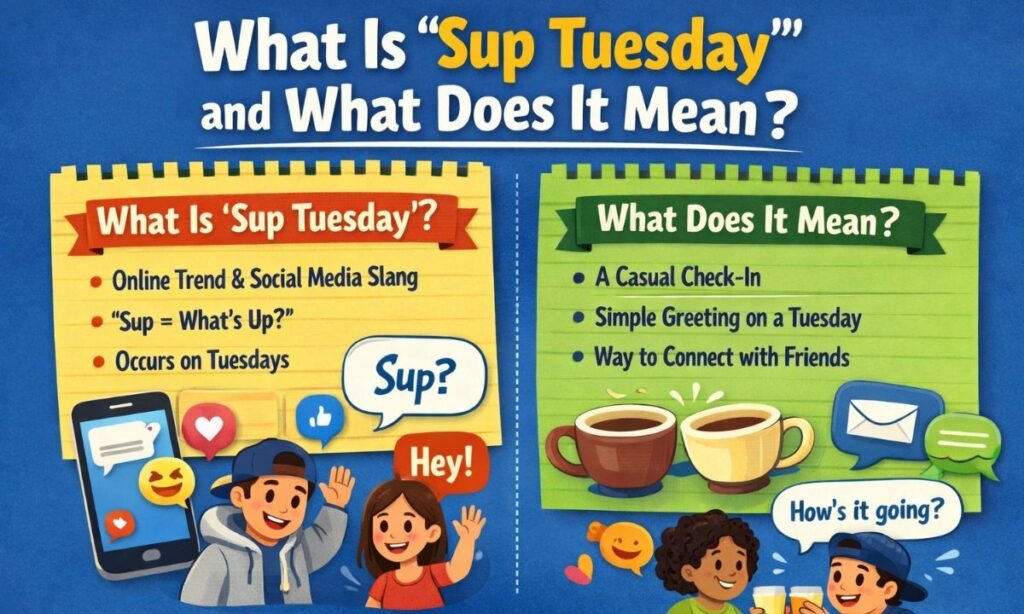
You may have seen the phrase “Sup Tuesday” floating around online and wondered what it means. This is actually a casual, social media-driven phrase a play on well-known “Tuesday” expressions like “Taco Tuesday” or the politically significant “Super Tuesday.”
In the context of online communities and group chats, “Sup Tuesday” is used informally to mean something like “What’s up this Tuesday?” a weekly check-in format where people share what they are up to. It is used on Discord servers, Reddit threads, and social media platforms as a recurring conversation starter.
It is not an officially recognized term. It is just an organic piece of internet culture people using “sup” in combination with a day of the week to create a regular, casual touchpoint with their community.
This is separate from Super Tuesday, which is an official U.S. political term referring to the day when the largest number of states hold their presidential primary elections and caucuses, typically allocating around one-third of all party delegates in a single day.
Turning “Sup” Into an Actual Conversation
Getting past the opener is where most text conversations either take off or die. “Sup” “nm u?” “nm” is a loop that goes nowhere. Here is how to break out of it.
Strategy 1: Share Something Real
Give them a window into your actual day. It doesn’t have to be dramatic just real.
“Not much, just got back from a walk. My neighborhood has a surprisingly aggressive goose situation. You?”
Strategy 2: Ask a Specific Question
Instead of “how are you?” try something that requires a real answer.
“Not much here! Hey, real question are you a morning person or do you just pretend to be?”
“Just saw something that made me think of you. Have you ever tried [thing]?”
Strategy 3: Reference Something Shared
If you have history with the person, use it.
“Not much still recovering from that thing you sent me last week. Why did you do that to me?”
“Nothing new, but I’ve been thinking about what you said the other day. Do you actually believe that?”
Strategy 4: Use Humor to Create Momentum
“Nothing much just living in a series of increasingly questionable decisions. What’s good on your end?”
Humor lowers defenses and signals that you are fun to talk to. It transforms “sup” from a dead-end greeting into the start of something actually enjoyable.
Why Tone and Context Matter in Texting
Here is the thing about text-based communication: you lose about 60% of the signals you would normally have in person tone of voice, facial expression, body language. That means the same three letters (“sup”) can mean completely different things depending on:
- Who sent it a friend vs. an ex vs. a crush vs. a coworker
- What time it was sent 10 AM vs. 11 PM
- What came before it after a fight, after weeks of silence, or out of nowhere
- How it was sent plain text, with a GIF, with an emoji, as a voice note
A “sup 😏” is not the same as “sup.” A “sup” after a long silence is not the same as a daily “sup.” Learning to read these subtle cues is what separates a forgettable reply from one that actually lands.
When in doubt, match the energy. If someone sends a casual “sup,” a casual response is appropriate. If there’s a charged context, you might want to acknowledge it rather than deflect.
Understanding the Real Meaning Behind “Sup”
On the surface, “sup” is just a greeting. But if you look at what it actually does, it is a social tool a way of saying “I’m thinking about you” without the vulnerability of saying it directly.
When someone texts you “sup,” they chose to reach out. They picked up their phone and thought of you. That choice is worth more than the word itself. Whether it is a friend checking in, a crush testing the waters, or a family member being casual, the fact that they reached out is the real message.
Your reply, then, is not just an answer it is your choice about what to do with that invitation. You can keep it surface-level, or you can open a door to something more meaningful. That choice is entirely yours.
Frequently Asked Questions
Q: What does “sup” mean in English?
“Sup” is an informal short form of “what’s up?” used as a casual greeting meaning “how are you?” or “what’s going on?”
Q: What is the best reply to “sup”?
The classic “not much, you?” always works, but adding one specific detail makes your reply far more engaging and conversation-worthy.
Q: What does “sup” mean in WhatsApp chat?
On WhatsApp, “sup” is typically a relaxed, friendly check-in someone seeing if you are available to chat or just saying hello casually.
Q: What does “sup” mean from a girl?
It usually means she is being friendly and comfortable with you, though if paired with certain emojis or sent at unusual hours, it can signal flirtatious intent.
Q: What is “Sup Tuesday”?
It is an informal, internet-culture phrase used in group chats and communities as a weekly casual check-in essentially “what’s up this Tuesday?” It has no official meaning.
Q: Is “sup” rude?
Not at all in casual settings among friends and peers, “sup” is perfectly normal. It is simply informal and should not be used in professional or formal contexts.
Q: What does “sup” mean on Wikipedia?
Wikipedia does not have a dedicated page for “sup” as slang. The word’s formal meanings (to eat supper, to take a sip) are older uses. In modern digital culture, it is recognized universally as a casual greeting derived from “what’s up?”
Q: Can I reply to “sup” with “sup”?
Yes, and in many casual contexts, that is a perfectly valid exchange it signals mutual comfort and keeps things easy. Just know it doesn’t advance the conversation much.
Q: How do I make my “sup” reply more interesting?
Add a small, specific detail about your day, ask a follow-up question, or throw in a bit of humor. These three moves consistently keep conversations alive.
Q: Is “sup” used professionally?
Only in very relaxed, informal work environments. For most professional communication, it is better to stick with “hey” or “hi.”
Conclusion
“Sup” is three letters. But how you respond to it can open a conversation, deepen a connection, or set the tone for an entire relationship. The word itself is neutral it is what you do with it that matters.
The best reply to “sup” is not a script. It is an honest, personality-driven response that fits the situation. Sometimes that means “not much, you?” and sometimes it means turning a casual opener into a conversation neither of you expected to have.
Now that you know what “sup” means in chat, on WhatsApp, from a girl, and in everyday English and you have a full toolkit of replies to draw from you are ready for whatever hits your inbox next.

Thomas is the creator of MeaningDrift, a writer guided by curiosity and a passion for meaning. With a background in existential psychology and comparative spirituality, Thomos translates deep questions into clear, compassionate guidance. Their writing invites readers to explore life’s purpose and craft meaning in everyday moments.