

If you’ve ever seen “ISTG” pop up in a text message, a TikTok comment, or an Instagram caption and felt confused you are not alone. Internet slang moves fast, and ISTG meaning has become one of the most searched terms in digital communication today. This guide breaks down everything you need to know: what ISTG means, where it came from, how it’s used by different people, and when to use it yourself.
No fluff. No jargon. Just a clear, complete answer.
What Does ISTG Mean in Text?
ISTG stands for “I Swear To God.”
It is an abbreviation used in text messages, online chats, and social media to add emotional weight to a statement. When someone types ISTG, they are not necessarily making a religious promise. In modern digital language, it acts as an emotional intensifier a way of saying, “I really mean this.”
Quick Definition Table:
| Term | Full Form | Primary Use |
| ISTG | I Swear To God | Emphasis, honesty, frustration |
| FR | For Real | Agreement, confirmation |
| ONG | On God | Strong emphasis (Gen Z alternative) |
| TBH | To Be Honest | Sharing genuine opinions |
| NGL | Not Gonna Lie | Honest admission |
Core Meanings of ISTG in Texting
ISTG meaning in text does not stay fixed its tone shifts based on context. Here are the three core ways people use it:
1. Expressing Honesty or Sincerity When someone wants to convince you they are telling the truth, they drop ISTG at the start of the sentence. Example: “ISTG, I never touched your phone.”
2. Showing Frustration or Annoyance When patience runs out, ISTG signals that the person has reached their limit. Example: “ISTG, if this happens one more time, I’m done.”
3. Emphasizing Excitement or Strong Emotion Used positively to amplify how much someone loves or enjoys something. Example: “ISTG this song has been on repeat for three days.”
Origin of ISTG
The phrase “I swear to God” has existed in spoken English for centuries as a way to assert truth or seriousness. The abbreviated form ISTG emerged in the early 2000s alongside the rise of instant messaging platforms like AIM and MSN Messenger. As character limits and typing speed became important in digital communication, long phrases were naturally shortened.
By the time smartphones became mainstream in the early 2010s, ISTG had already settled into everyday texting culture alongside abbreviations like LOL, OMG, and BRB. Today in 2026, it is a standard piece of internet slang used by millions worldwide, particularly among teenagers and young adults.
ISTG Meaning in Text vs Real Life Speech
In real-life conversation, saying “I swear to God” carries a heavier, more dramatic tone. It signals that the speaker is deeply serious sometimes even defensive or emotional. People often say it slowly for effect.
In texting, however, ISTG meaning is lighter and more casual. It functions less like a solemn oath and more like a punctuation mark for emotion. You might type it while laughing, venting, or simply emphasizing a point without any dramatic intention.
Key difference: In speech, “I swear to God” sounds intense. In a text, ISTG can be playful, sarcastic, frustrated, or sincere depending entirely on context.
ISTG Meaning Slang
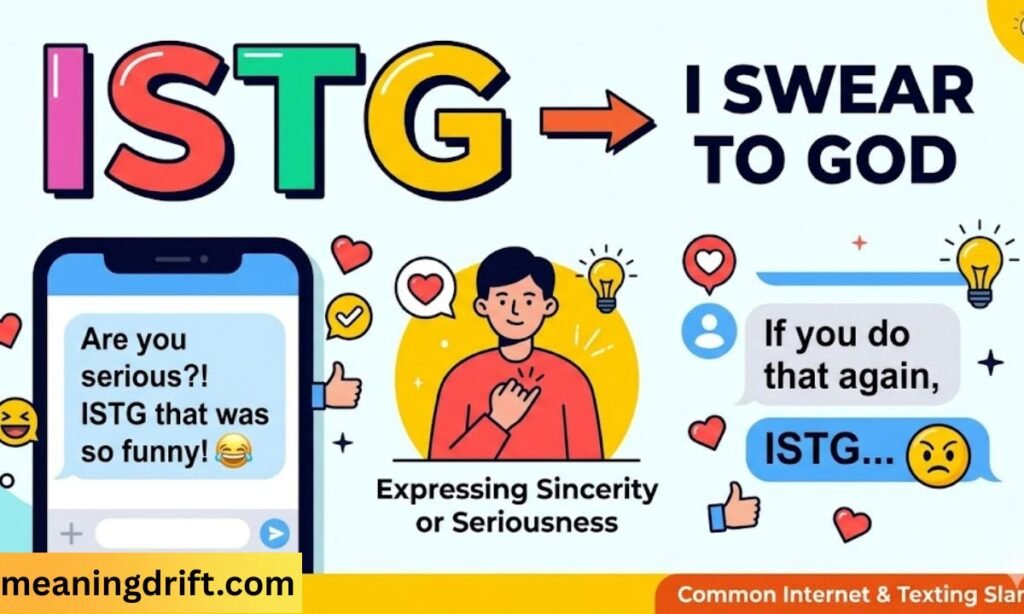
As ISTG meaning slang evolved through internet culture, it moved far from its literal roots. Online, it rarely signals anything religious. Instead, it acts as a digital emphasis tool similar to bold text or capital letters in a message. Think of it like this: typing “I’m tired” is a statement. Typing “ISTG I’m so tired 😭” transforms it into an emotional expression that people feel.
That shift from literal phrase to emotional shorthand is exactly why ISTG meaning slang remains so popular in 2026.
Also Read This:What Does JW Mean in Text? Complete Guide 2026
ISTG Meaning from a Girl
When a girl uses ISTG in a message, it often carries a mix of playful drama and genuine emotion. Girls commonly use it to emphasize feelings, call out behavior, or express affection in a casual way.
Common examples:
- “ISTG you are literally the sweetest person ever 🥹”
- “ISTG if he cancels again, I’m blocking him 😤”
- “ISTG this outfit is everything 😍”
The tone tends to lean expressive and social using ISTG to connect emotionally rather than just assert facts.
ISTG Meaning from a Boy
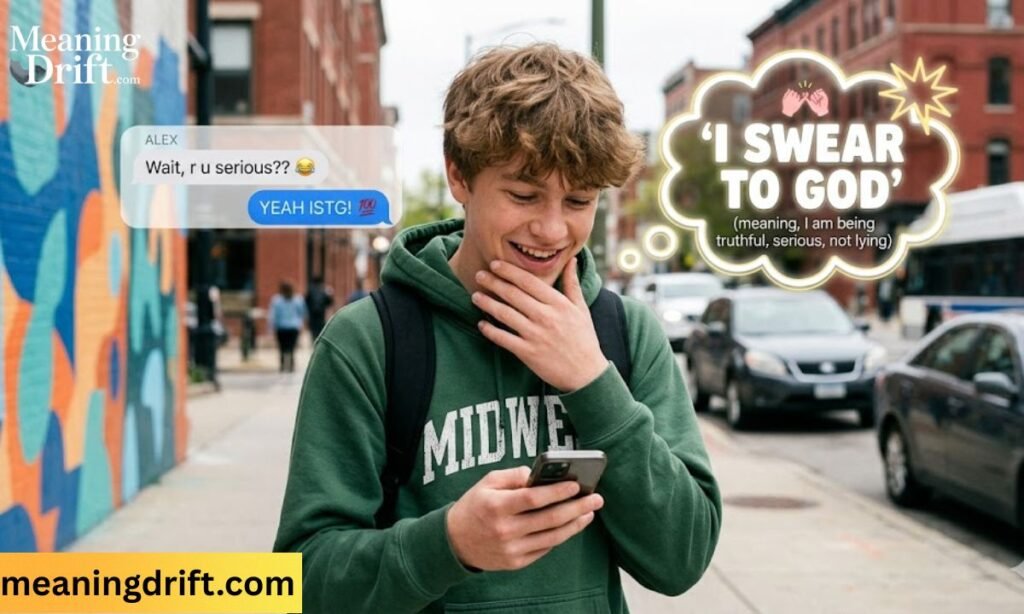
When a boy uses ISTG, it usually signals that he is being serious and wants to be believed. Boys more commonly reach for it in defensive or assertive contexts defending themselves, making a strong point, or reacting to something that genuinely frustrated them.
Common examples:
- “ISTG bro, I was there on time. Ask anyone.”
- “ISTG this team needs a new strategy.”
- “ISTG I didn’t say that.”
While the core ISTG meaning stays identical regardless of gender, the emotional tone and use cases tend to differ slightly between social contexts.
How ISTG Is Commonly Used in Messages
ISTG shows up across virtually every digital platform. Here is where you will find it most:
- Group chats Someone venting about their day or reacting to news
- Direct messages Expressing sincerity or urgency to a close friend
- TikTok captions Creators adding emotional emphasis to their videos
- Instagram comments Reacting to posts with strong personal opinions
- Snapchat replies Fast, reactive responses to snaps or stories
- Twitter/X threads Expressing strong takes on trending topics
In every platform, ISTG serves the same purpose: making the message feel more real, more urgent, and more emotionally honest.
ISTG Meaning Bridgerton
One of the most entertaining moments in the 2026 pop culture calendar involved ISTG and the Bridgerton Season 4 press tour. Actor Luke Thompson who plays Benedict Bridgerton went viral after he encountered the term in a fan comment and pronounced it phonetically as “Istg” instead of reading it as an acronym. In a follow-up interview, when asked what it meant, Thompson confidently answered: “Instagram.”
His co-star Yerin Ha burst into laughter and gently corrected him ISTG means “I Swear To God.”
The clip spread across TikTok and Instagram instantly, turning Thompson into an endearing meme. Netflix even updated their Instagram bio to read “welcome to our ISTG page” as a playful nod. Now, fans sometimes use “ISTG” humorously in Bridgerton contexts with both meanings the slang and the Instagram joke blended together.
Real-Life Examples of ISTG in Text
Here are authentic, everyday examples of how ISTG appears in actual conversations:
Frustration:
“ISTG if the Wi-Fi cuts out during this match one more time 😡”
Honesty:
“ISTG I studied for five hours. I have no idea why I failed.”
Excitement:
“ISTG this restaurant is the best decision we’ve made all year 🍜”
Warning:
“ISTG if you spoil the ending for me, we’re not friends anymore.”
Affection:
“ISTG you’re genuinely the funniest person I know 😭”
ISTG Meaning in Chat
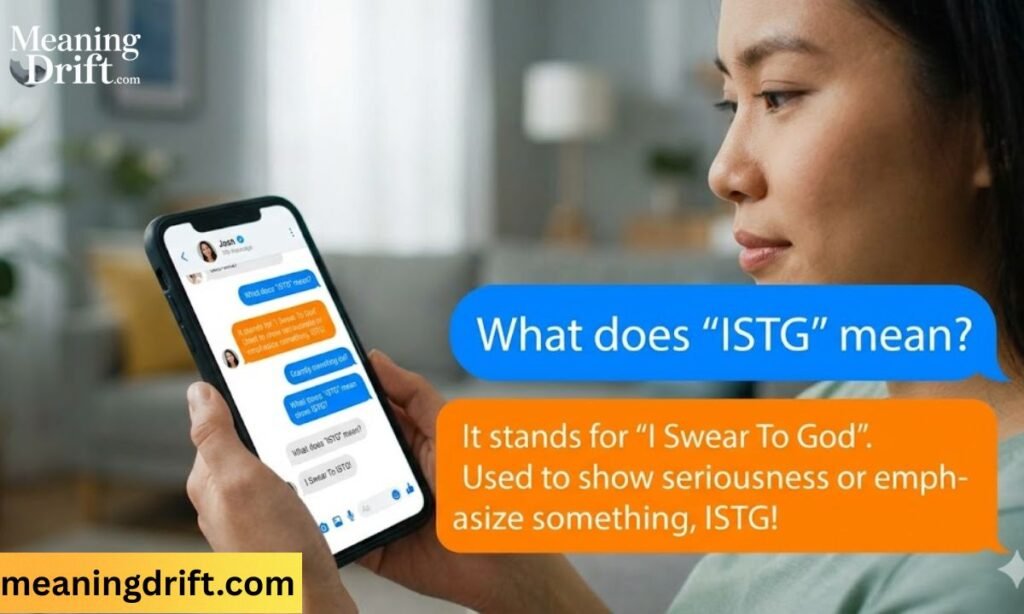
In chat platforms specifically WhatsApp, Telegram, Discord, iMessage ISTG meaning in chat carries slightly more personal weight because the audience is smaller and the relationship is closer. When someone texts ISTG in a one-on-one chat, they usually mean it more directly than in a public comment section.
In group chats, it is often used for comic effect exaggerating frustration or excitement to make people laugh and relate.
ISTG Meaning Gen Z
For Gen Z, ISTG meaning is deeply embedded in everyday digital expression. It belongs to a category of emotional shorthand that Gen Z uses to communicate with authenticity and speed alongside terms like “FR,” “ONG,” “no cap,” and “lowkey.”
Gen Z rarely uses ISTG in a literal or religious sense. It is simply a tool to make their messages feel real and unfiltered. Older generations like Millennials and Gen X might have typed out the full phrase “I swear to God” back in the day. Gen Z shortens it, layers it with emojis, and moves on.
Emotional Tones of ISTG
ISTG is emotionally flexible. The same four letters can carry very different feelings:
| Tone | Example | What It Signals |
| Frustration | “ISTG I’m so done with this.” | Patience exhausted |
| Sincerity | “ISTG I didn’t know about it.” | Honest defense |
| Excitement | “ISTG this is the best day.” | Pure enthusiasm |
| Sarcasm | “Oh ISTG you’re such a great driver 🙄” | Opposite meaning intended |
| Affection | “ISTG you’re everything 🥺” | Warm, genuine emotion |
Reading which tone is intended requires context the surrounding words, emojis, and the relationship between the people chatting.
ISTG vs Similar Slang Terms
ISTG meaning overlaps with several other popular abbreviations but each has its own flavor:
- ISTG vs FR: “FR” (For Real) confirms agreement. ISTG adds emotional intensity on top of that.
- ISTG vs ONG: “ONG” (On God) is the trendier Gen Z alternative with the same basic meaning. ONG feels newer; ISTG feels more classic.
- ISTG vs TBH: “TBH” (To Be Honest) signals an opinion is incoming. ISTG emphasizes that what you’re saying is true right now.
- ISTG vs NGL: “NGL” (Not Gonna Lie) softens an admission. ISTG strengthens a declaration.
- ISTG vs SMH: “SMH” (Shaking My Head) shows disappointment. ISTG shows intensity, which may include disappointment but goes further.
Is ISTG Offensive?
ISTG is generally not considered offensive in casual digital communication. It is widely accepted as harmless slang in most online spaces.
However, there are situations where it can create friction:
- Religious sensitivity: Because it references God, some individuals from devout backgrounds may find it disrespectful, even in a casual context.
- Formal settings: Using ISTG in a professional email, academic writing, or a message to someone in authority comes across as careless or unprofessional.
- Misread aggression: Without emojis or context, “ISTG” can read as hostile or confrontational, even if the sender intended something light-hearted.
The bottom line: ISTG is appropriate among friends and peers in casual conversations. In formal or sensitive contexts, it is best left out.
How to Respond When Someone Says ISTG
When someone sends you ISTG, your response depends entirely on the emotional tone behind it:
If they are frustrated: Acknowledge their feeling. “That sounds genuinely annoying, what happened?”
If they are asserting honesty: Accept their word or ask a follow-up. “Okay okay, I believe you!”
If they are excited: Match their energy. “ISTG same, I can’t stop thinking about it either 😭”
If they are being sarcastic: Play along or address it lightly. “Lmao okay, noted 😂”
The key is to read the full message, not just the word ISTG.
ISTG in Social Media Captions
On social media, ISTG meaning shifts slightly to serve a more public purpose. When creators and users add it to captions, they are trying to come across as authentic, relatable, and real qualities that audiences respond to positively.
Examples of ISTG in captions:
- “ISTG I haven’t slept in 36 hours but this outfit was worth it ✨”
- “ISTG spring needs to come back immediately 🌸”
- “ISTG if one more person asks me this question 😅”
On TikTok, ISTG in captions builds a sense of dramatic storytelling. On Instagram, it adds personality. On X (formerly Twitter), it signals a strong opinion. The platform shapes the tone, but the tool remains the same.
Who Uses ISTG the Most?
ISTG is used most heavily by:
- Teenagers (13–19): The core demographic where ISTG is second nature in everyday conversation.
- Young adults (20–30): Millennials and older Gen Z who grew up with texting culture.
- Content creators: TikTokers, YouTubers, and influencers who use it to sound relatable.
- Fan communities: Pop culture fandoms reacting to shows, movies, sports, and music.
Older adults occasionally use ISTG when they pick it up from younger family members or from heavy social media use, but it is not their native digital dialect.
Do’s and Don’ts of Using ISTG
Do’s:
- Use ISTG in casual conversations with friends and peers
- Pair it with emojis to signal your emotional tone clearly
- Use it when you genuinely want to emphasize a point or feeling
- Keep it in informal digital spaces chats, captions, comments
Don’ts:
- Do not use ISTG in professional emails or work messages
- Do not use it with people who might find the religious reference disrespectful
- Do not overuse it ISTG loses impact when it appears in every other sentence
- Do not rely on it in serious or sensitive conversations where tone clarity matters
Why ISTG Became Popular
Several factors drove ISTG into mainstream digital language:
Speed: Four letters replace seven words. In a fast texting world, that matters.
Emotional range: ISTG handles frustration, sincerity, sarcasm, and excitement making it incredibly versatile.
Platform culture: TikTok, Snapchat, and Instagram reward expressive, personality-driven communication. ISTG fits that culture perfectly.
Gen Z adoption: Once Gen Z embedded it into everyday language, it spread rapidly across age groups and platforms.
Pop culture moments: Events like the Bridgerton ISTG meme in 2026 pushed it even further into mainstream awareness, introducing it to audiences who had never encountered the term before.
Psychology Behind ISTG Usage
Why do people reach for ISTG instead of just stating something plainly? The answer lies in how digital communication works.
Text messages strip away tone of voice, facial expressions, and body language the things that normally carry emotional meaning. ISTG compensates for that loss. It tells the reader exactly how serious, frustrated, or excited the sender is, without requiring a phone call or a video chat.
Psychologically, using ISTG also signals in-group membership. Knowing and using current slang tells others: “I am part of this culture. I understand how we communicate here.” For teenagers especially, that kind of social belonging is deeply important.
There is also an element of emotional release in it. Typing “ISTG I’m so done 😭” gives the writer a satisfying outlet for frustration that a plain sentence simply does not provide. Slang, at its core, is about expressing human emotion as efficiently as possible and ISTG does that extremely well.
Frequently Asked Questions
What does ISTG mean in text?
ISTG means “I Swear To God” used to emphasize honesty, frustration, or strong emotion in digital messages.
Is ISTG a bad word?
No, ISTG is not a bad word. However, it can feel inappropriate in formal or religious contexts.
What does ISTG mean from a girl?
From a girl, ISTG is usually expressive and emotional used for affection, drama, or emphasis in casual conversation.
What does ISTG mean from a boy?
From a boy, ISTG typically signals seriousness or defense often used to assert truth or react to frustration.
What is ISTG in Bridgerton?
Actor Luke Thompson went viral in 2026 for not knowing what ISTG meant, mistakenly calling it “Instagram” turning it into a beloved fan meme.
Is ISTG the same as ONG?
They are similar both emphasize sincerity but ONG feels more current, while ISTG has been around longer and feels more classic.
Can I use ISTG at work?
No. ISTG belongs in casual conversations. Using it professionally can seem unprofessional or inappropriate.
What does ISTG mean in Gen Z slang?
For Gen Z, ISTG is a casual emotional intensifier not a literal oath, just a fast way to express strong feeling in a message.
Conclusion
ISTG meaning has come a long way from its roots as a spoken oath. Today, it is one of the most versatile and widely recognized pieces of internet slang in digital communication a compact tool that packs honesty, frustration, excitement, and sarcasm into just four letters.
Whether you spotted it in a friend’s message, a TikTok caption, or a Bridgerton meme, you now know exactly what it means, how it is used, and when it is appropriate. Understanding ISTG meaning is not just about keeping up with slang it is about reading digital emotion more accurately and communicating more naturally in the spaces where modern conversation actually happens.
Use it wisely, read it in context, and you will always understand the message behind the message.

Thomas is the creator of MeaningDrift, a writer guided by curiosity and a passion for meaning. With a background in existential psychology and comparative spirituality, Thomos translates deep questions into clear, compassionate guidance. Their writing invites readers to explore life’s purpose and craft meaning in everyday moments.